Case Study
Magenta
Huge's publication for the people who think about people, technology, and design like it's their job.
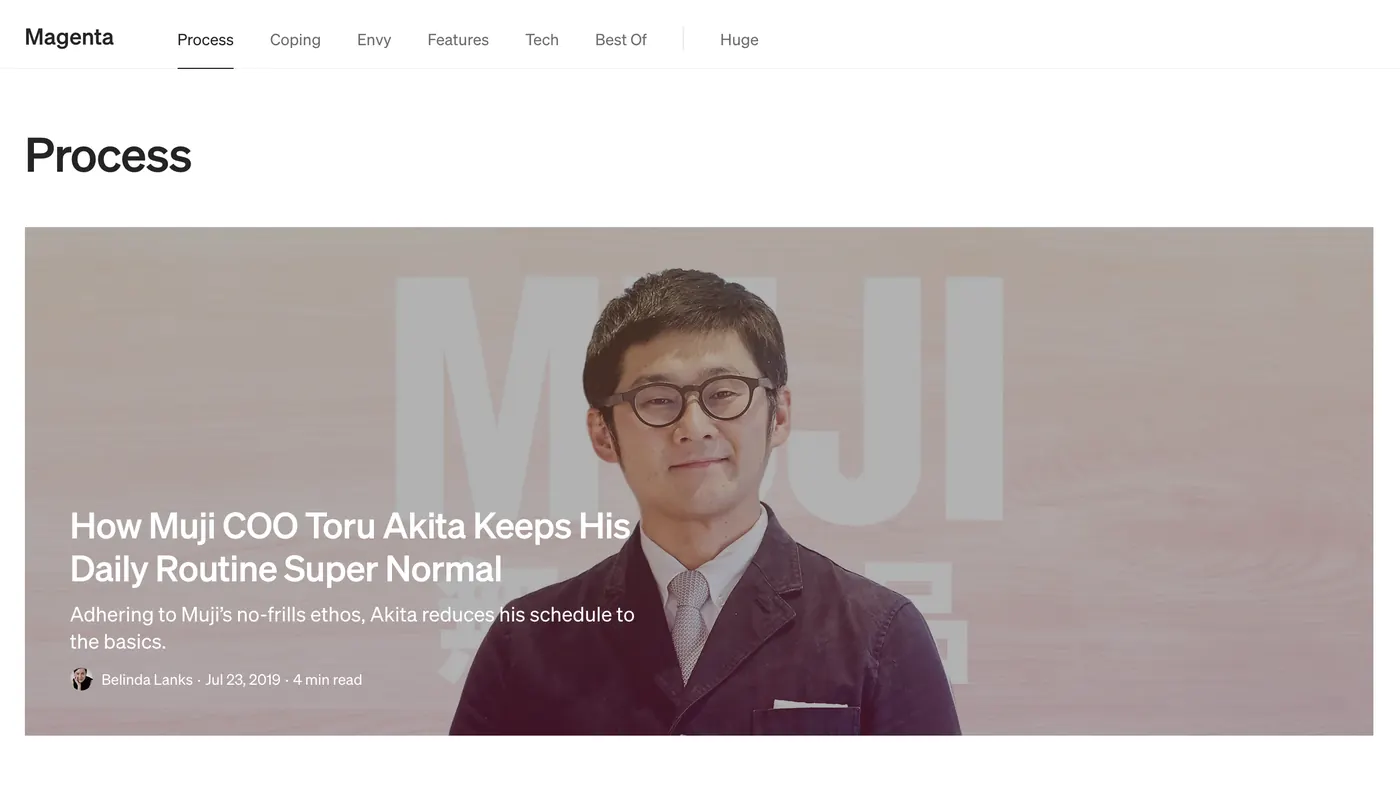
Running an agency publication with real editorial independence is rarer than it sounds. Magenta had it, and that autonomy is what set it apart. The publication built genuine cultural cachet for Huge at a moment when the agency was competing hard for top creative talent: people at other agencies knew Magenta by name and wanted in. It also functioned as a proof of concept for Huge's editorial services, giving prospective clients a living demonstration of what the agency could do.
The challenge
The risk with any agency publication is that it becomes a brochure with a masthead: useful for marketing, invisible to everyone else. Magenta had to be worth reading on its own terms, which meant holding it to the standards of independent editorial — real reporting, clear points of view, and a voice that didn't hedge every sentence for fear of offending a client.
The approach
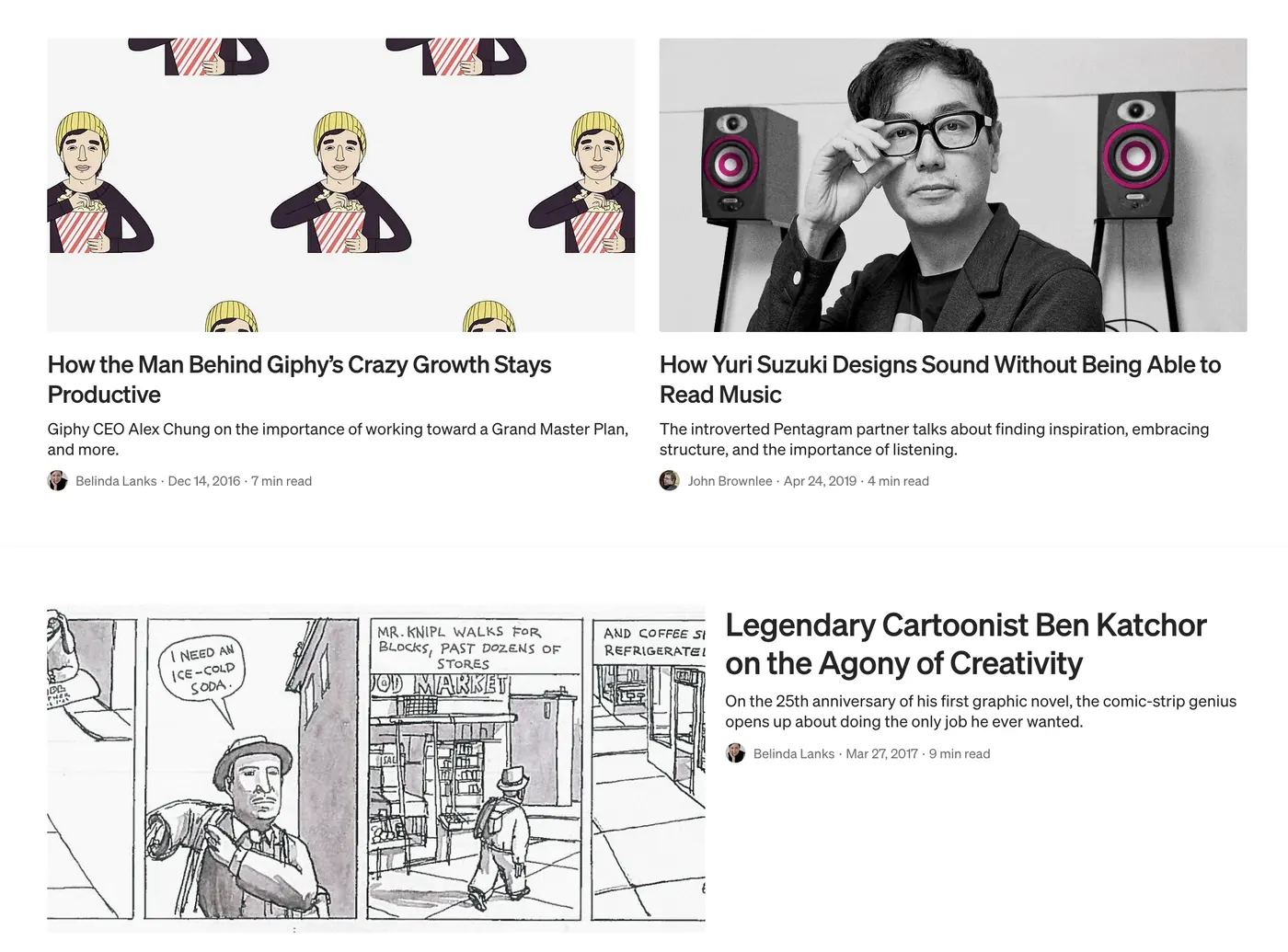
I ran Magenta as a real publication. The editorial voice was generous toward its subjects and skeptical of industry mythology. Reported pieces were deeply sourced. Opinion pieces took clear positions. We favored specificity over generalized trend pieces, and photography and illustration received the same editorial attention as the prose. We occasionally profiled competitors — a deliberate signal that the work came before the agency agenda.
Contributors included writers and editors from The New Yorker, The Atlantic, and WIRED. The question driving every story was consistent: what does creative work actually look like in practice, and what's worth saying about it that hasn't already been said?
The live programming extended that sensibility off the page. Magenta Talks brought the same editorial curiosity to a physical space, with events built around a single idea and enough room afterward for real conversation. I conceived and produced the series as both a community-building effort and a business development opportunity, getting clients and prospective talent into the room in a context that felt valuable rather than transactional.
Results
Magenta ran for four years and became a recognized presence in design and technology circles, earning coverage in the trade press and building a reputation among agencies as the rare publication that took editorial seriously. The talks series created a consistent pipeline of client and talent engagement for Huge. And the publication's reputation for independence made it effective precisely because it didn't read like agency marketing — which, of course, made it the best kind.